| Our Vanishing Rainforests |
 No
matter where they are, all rainforests are in danger of destruction, and
with them thousands and thousands of plants, animals, birds and insects
will disappear. Mexico’s forests are home some of the most to endangered
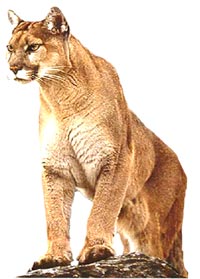
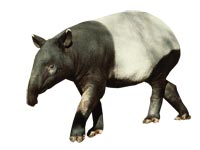
mammals in America. The tapir, the manatee, as well as wild cats such
as jaguars, pumas, ocelots and jaguarundis live in the Sian Ka’an,
an area made up of sea, tropical forests, flood jungles, marshlands, mangroves,
lagoons, shallow ocean areas and a coral reef.
There are spider monkeys, white-tailed
deers and 300 species of birds such as the rare quetzal, stork, harpy
eagle, humming bird, white ibis, the almost extinct jabiru, toucans and
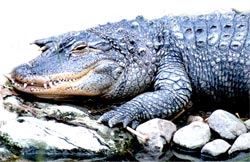
the Yucatan parrot. Reptiles like crocodiles and sea turtles also inhabit
the area and many varieties of snake and, of course, a large variety of
spiders and insects (including the leaf-cutter ant and the praying mantis).
The 1,700,000 acre Calakmul rainforest in Chiapas, just north of the Guatemala
border, is home to many of the same species and is one of the few places
on earth where jaguars still run free.
 The plight of the Lacandona rainforest
is particularly dire. A century ago, the jungle stretched out over 1.3
million hectares and was inhabited by around 2,000 people. Today, although
shrunken to 500,000 hectares and home to some 300,000 people, this fragile
and heavily pressured environment still constitutes 50 percent of North
America’s tropical rain forests. Most of Mexico’s tropical
trees are found there along with 14 percent of the country’s species
of mammals, 33 percent of reptiles, 80 percent of butterfly species and
32 percent of bird species.
 Today,
it suffers not only the usual woes of overpopulation, illegal hunting
and clear-cut logging but, since 1994, has been the site of a small scale
war between the EZLN (Zapatista National Liberation Army) and the Federal
troops trying to contain them. The Lacandon Indians, who have been living
in the area for hundreds of years, are not guilty. They have always respected
their environment and are bitterly vociferous in their protests against
current abuses, and with good cause. A spokesman for the international
environmental watchdog, Greenpeace, warns that the Lacandona jungle is
being destroyed faster than South America’s Amazon jungle and, if
nothing is done to stop the abuses, will not survive another twenty years.
The Lacandons also denounced mistreatment of local peasants by army troops,
and growing alcoholism and prostitution arising from the military presence.
 Though
actual hostilities have been minimal, the impact of having 40,000 soldiers
driving tanks, building roads, establishing new outposts, overflying the
jungle and cutting firewood has been devastating. They also indiscriminately
hunt lizards, monkeys and other species to sell the skins. Due to the
conflict, authorities had no access to many parts of the jungle, making
it impossible to implement conservation programs and prevent illegal logging.
Furthermore, park rangers and inspectors were threatened and prevented
from carrying out their conservation work in Chiapas.
So we are losing our rainforests.
So what? What’s so important about a bunch of dumb trees? And wouldn’t
all that land be put to better use growing food crops for a hungry world?
You’d be surprised.
Rainforests once covered 14% of the
earth’s surface; now they cover only 6% and every minute another
150 acres are disappearing. An estimated 137 plant, animal and insect
species are lost each day. The biodiversity of the rainforests is astounding.
One hectare can support 750 types of trees and twice that many higher
plants, That equals the plant diversity of all North America.
Only about one percent of those plants
have been investigated for their medicinal possibilities. A conservative
estimate puts the number of useful, but undiscovered, drugs at 300 in
the Amazon rainforests alone.
Considering that some 7,000, or about
25 percent, of all pharmaceuticals prescribed today are derived from only
95 of the 250,000 known plant species and that the most promising cures
for AIDS and cancer come from rainforest ingredients, the potential loss
to medical science alone is staggering. Two drugs derived from one small
plant, now extinct, reduced the fatalities from childhood leukemia from
80 to 20 percent. What if....?
 It
has been estimated that 50 to 90 percent of all species on earth make
their homes in the rainforests. The figures are inexact because the various
layers of such forests provide ecological niches for so many birds, animals,
insects and reptiles that an exact census is virtually impossible. Biologists
are reasonably certain that in the highest reaches of the canopy, hundreds
of feet above the ground, whole communities exist that have never even
been sighted, much less identified and studied.
Contrary to popular belief, rainforests
are not hot, soggy hellholes. Their only requirement is 200 cm. (about
80 inches) of annual precipitation and, like those of the Pacific Northwest,
they flourish in relatively cold climates. Even in tropical areas where
temperatures rarely get below 80 degrees Fahrenheit, they seldom get much
higher either. In fact, the yearly temperature variation is so minimal
there can be a wider spread in one day than over the course of the year.
Loss of trees can, and does, affect the world’s climate. Satellite
pictures show dramatic alterations in temperature and rainfall patterns
over wide areas far beyond the actual sites of deforestation.
 Despite
all that rain, forest floors remain relatively dry. Almost all the moisture
is impounded within the plant tissues themselves and the same is true
for most of the nutrients so that the soil of a forest floor is thin and
poor. Even though the slash and burn agricultural techniques used by jungle
dwellers are bad enough, they do return some of those nutrients to the
soil in the form of ash. Still, yields are so poor after a year or two
that new plots must be prepared while the old recover. Cutting down and
hauling away the trees puts nothing back while allowing heavy rains to
leach out what little is left so that no trees will ever grow there again.
Neither will anything else. Left alone, the rainforests provide an astouding
80 percent of the world’s diet. So much for cutting down the trees
to feed the hungry.
 Still
not convinced? Think about this. Every school child knows the cycle; how
animals inhale air, using the oxygen in order to live and exhaling carbon
dioxide, while plants utilize that carbon dioxide in their growth and
produce oxygen in return. Our vanishing rainforests currently produce
50 percent of the earth’s oxygen supply. What happens
when all the trees are gone?